What Is a Scissor Lift? A Deep Dive into Safe Operation at Height
Last updated:
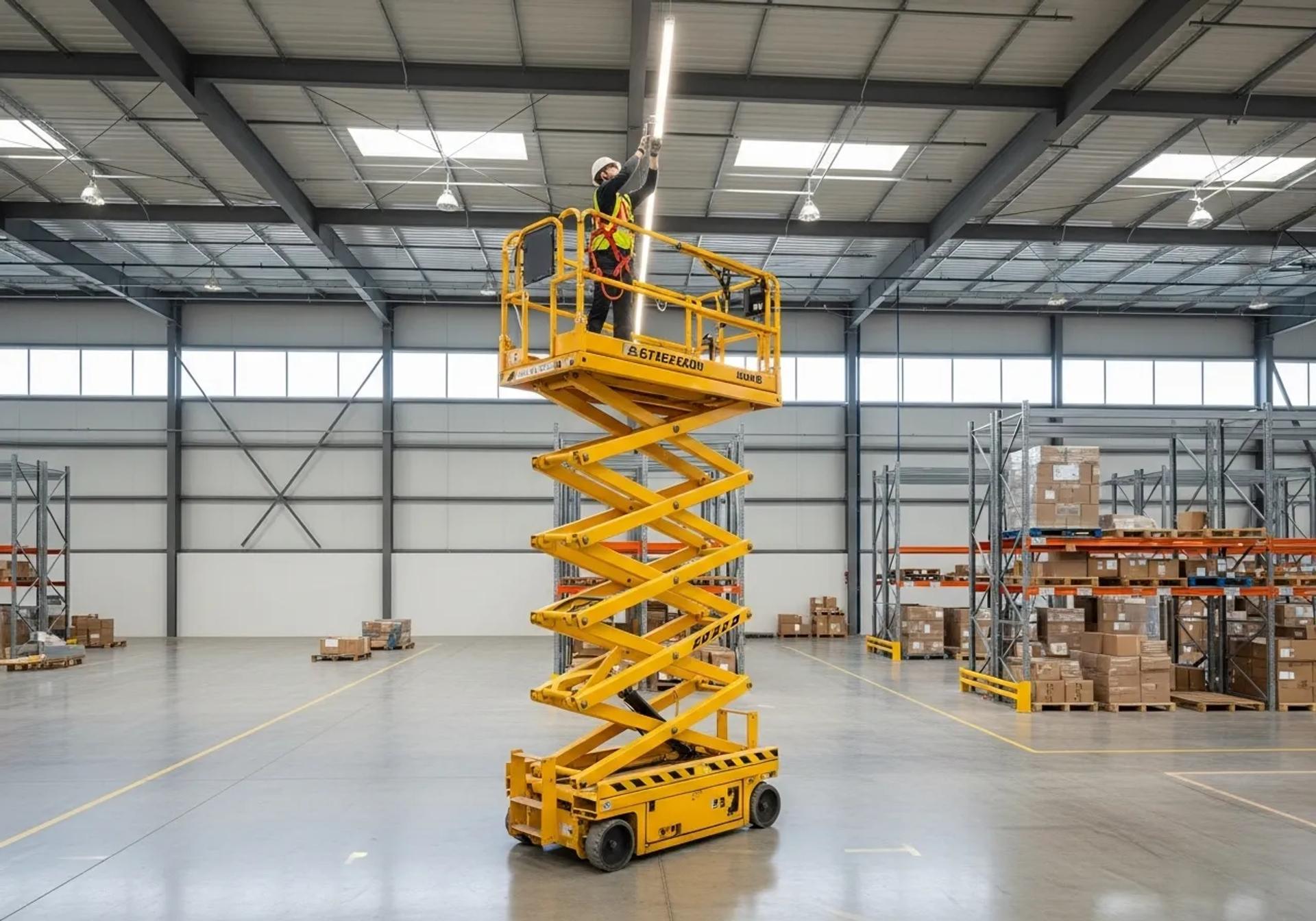
Working at height—whether installing billboards, maintaining electrical systems on a factory ceiling, painting a building, or arranging goods in a large warehouse—involves risks and requires appropriate equipment to ensure maximum safety and efficiency. In the past, we might think of time-consuming and labor-intensive scaffolding, but today, a device has revolutionized working at height, making it easier and safer: the Scissor Lift.
Many may still wonder, what exactly is a scissor lift? How does its appearance and operation differ from other types of lifts, and most importantly, how can we use it to ensure maximum safety? This article delves into every aspect of the scissor lift to provide a clear understanding.
Answering the Question: What Is a Scissor Lift?
To provide the clearest definition, what is a scissor lift? The answer is: "A type of Mobile Elevating Work Platform (MEWP) designed to move people, materials, and tools vertically to a height."
The name "scissor lift" comes from its distinctive physical feature: a set of crisscrossing steel arms (X-shaped) stacked in layers, resembling scissors. When the lift operates, these arms extend, pushing the work platform at the top straight up. To lower it, the arms fold back together smoothly. This simple yet highly stable mechanism makes the scissor lift a popular choice for jobs requiring a spacious and stable work area at height.


Key Components of a Scissor Lift
The core components that enable a scissor lift to operate stably and effectively are:
- Platform: The area where workers stand with materials and tools, built as a sturdy basket with guardrails on all sides to prevent falls.
- Scissor Stack/Legs: The main lifting mechanism, composed of multiple steel arms connected by pins. The hydraulic system pushes these arms to extend and lift the platform.
- Base: The bottom part of the machine that bears all the weight and provides stability, equipped with wheels and the main control unit.
- Power Source: Most scissor lifts use a hydraulic system for lifting, powered by either an electric battery or a diesel/gasoline engine.
- Control Panel: Typically located in two places: one at the base for basic movement and another on the platform, giving the operator control over movement and height.
Matching the Right Type of Scissor Lift to the Job
Choosing the correct type of scissor lift is crucial. They are generally categorized into two main types:
- Electric Scissor Lifts: Battery-powered, quiet, and emission-free. Ideal for indoor work on smooth surfaces.
- Rough Terrain / Engine-Powered Scissor Lifts: Driven by an engine, offering more power with large wheels and 4WD capabilities. Suited for outdoor work on uneven ground.
The Cornerstone of Scissor Lift Use: Safety
Understanding what a scissor lift is is not enough; using it safely is paramount:
- Training is Mandatory: Never operate a scissor lift without proper training.
- Pre-Use Inspection: Always check the machine, controls, and safety features before starting work.
- Assess the Work Area: The ground must be stable and level. Beware of obstacles and power lines.
- Do Not Overload: Strictly adhere to the specified load capacity.
- Use Personal Protective Equipment (PPE): Wear a hard hat, safety shoes, and potentially a harness.
A Powerful Tool That Demands Care
A scissor lift is a tool developed to enhance both the efficiency and safety of working at height. However, this power and convenience must be paired with knowledge and responsibility. Strict adherence to safety rules ensures that every worker returns home safely.