Electric Scissor Lift vs. Boom Lift: Which One is Right for Your Project?
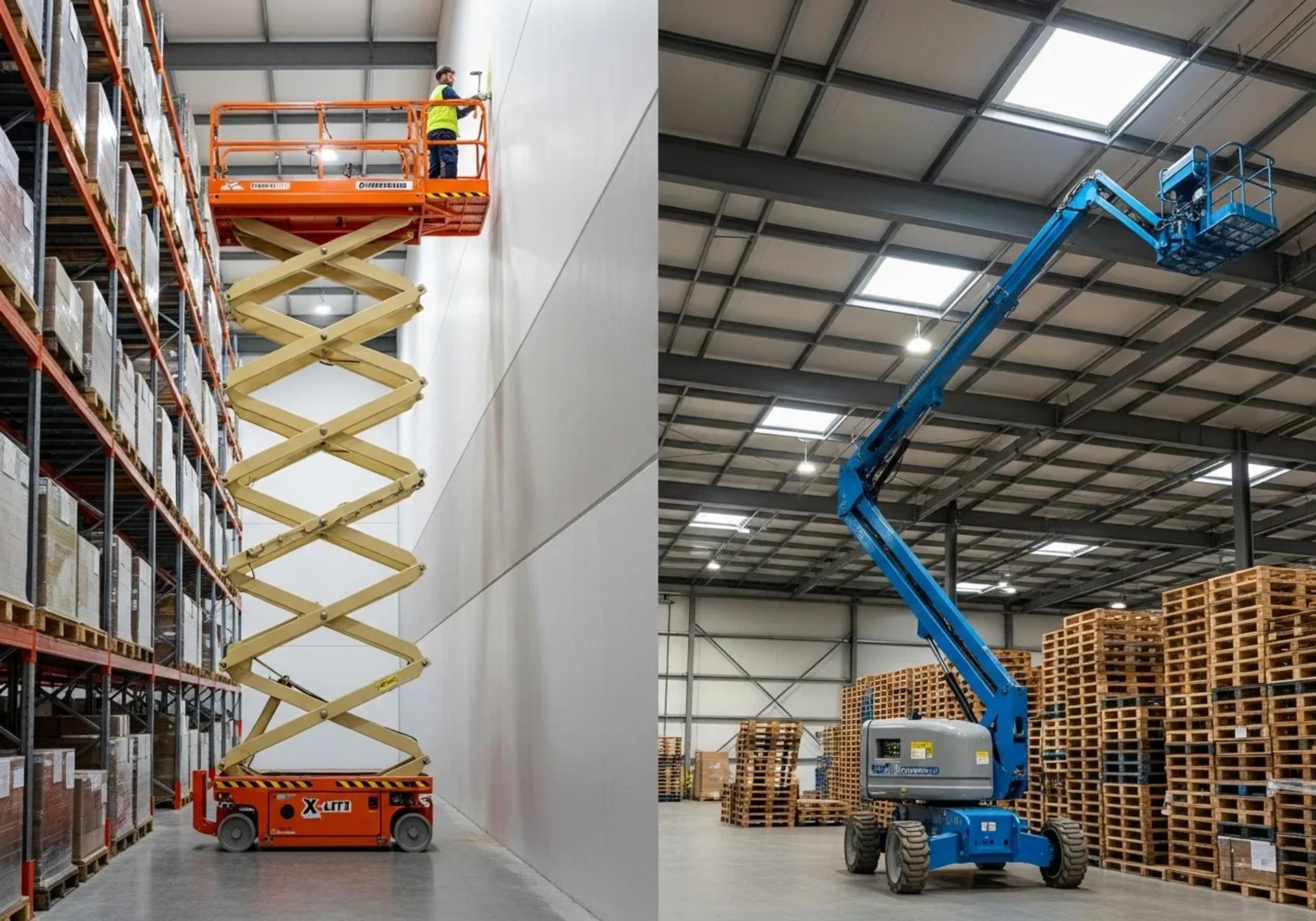
In modern construction and facility maintenance sectors, specifically for Indoor projects where strict regulations on noise and emissions apply, Electric Aerial Work Platforms (AWP) have undeniably become the gold standard. They have largely replaced unsafe traditional scaffolding and diesel-powered equipment that cannot operate in enclosed spaces.
However, procurement managers, site engineers, and project owners often face a common dilemma when planning their equipment rental: "Which one should I choose? An X-Lift for vertical reach or a Boom Lift for flexibility?"
At Namsang, as experts in heavy machinery, we are here to clarify the differences, advantages, and real-world applications to help you select the right tool for the job.
1. The X-Lift (Scissor Lift): The Master of Vertical Stability
The X-Lift, commonly known in the industry as a Scissor Lift, is the workhorse of indoor maintenance. It is characterized by its crisscrossing metal supports (pantograph mechanism) that elongate as the platform rises vertically.
Why Choose an X-Lift?
- Vertical Stability: Due to its center of gravity remaining within the base footprint, the Scissor Lift offers superior stability for straight-up and down lifting. This stability is crucial for precision work.
- Large Platform & High Capacity: One distinct advantage over boom lifts is the workspace. The platform is significantly larger, allowing multiple workers (2-3 people) to operate simultaneously. It also boasts a higher weight capacity, making it ideal for lifting heavy materials like drywall, piping, or HVAC units.
- Compact Storage: When fully retracted, electric scissor lifts are compact and low-profile, allowing them to fit through standard doorways and into freight elevators with ease.
Limitations: The Scissor Lift lacks "outreach" capability. It must be positioned directly underneath the work area. While some models feature roll-out extension decks, they cannot reach over large obstacles.
2. The Boom Lift: The Master of Reach and Flexibility
Boom Lifts feature a telescopic or articulating arm that can extend outward and upward. Electric models are specifically designed for indoor use, often featuring non-marking tires to protect finished floors.
Why Choose a Boom Lift?
- Outreach Capability (Up-and-Over): This is the defining feature of a boom lift. If your work target is obstructed by machinery, shelving, or structural beams on the ground, a boom lift can extend its arm "up and over" these obstacles to reach the specific point needed.
- 360-Degree Maneuverability: The turret can rotate a full 360 degrees. This allows the operator to reposition the basket left or right without having to move the base of the machine, which saves significant time.
- Access to Tight Spaces: Articulating Boom Lifts (Knuckle Booms) have multiple joints that allow the arm to bend around trusses and ductwork in the ceiling, reaching areas that would be impossible for a straight lift.
Limitations: Boom lifts generally have a smaller platform size (basket) and a lower weight capacity compared to scissor lifts (usually rated for 2 people). They are also typically more expensive to rent than scissor lifts of the same height.


3. Application Scenarios: Matching the Machine to the Task
To help you decide, let's look at common job site scenarios:
Scenario 1: Ceiling Installation, Lighting, or Painting
- Recommendation: X-Lift (Scissor Lift)
- Reason: These tasks usually require lifting materials and tools. The X-Lift provides a larger, stable platform for workers to move around and place tools. If the floor is clear, driving the scissor lift along the work path is efficient and cost-effective.
Scenario 2: Maintenance Above Machinery or Production Lines
- Recommendation: Boom Lift
- Reason: In a factory with fixed machinery, you cannot drive a lift directly under the light fixture or pipe that needs repair. A Boom Lift allows you to park in the aisle and extend the boom arm over the machinery to perform the maintenance safely.
Scenario 3: Narrow Warehouse Aisles
- Recommendation: X-Lift (Scissor Lift)
- Reason: Electric Scissor Lifts often feature zero-radius turning, making them incredibly agile in tight aisles. Boom lifts, due to the counterweight, often have a "tail swing" when rotating, which creates a risk of hitting racking systems in narrow spaces.
Scenario 4: Budget Considerations
- Recommendation: X-Lift (Scissor Lift)
- Reason: Generally, scissor lifts have a lower rental rate and purchase price compared to boom lifts. If your project does not strictly require horizontal reach, choosing an X-Lift is the smart way to optimize your budget.
Conclusion: Safety and Efficiency First
The rule of thumb is simple: If your project involves "heavy lifting, vertical access, and clear floor space," the X-Lift is your most efficient and cost-effective choice. However, if you face "obstacles, hard-to-reach angles, or complex overhead structures," a Boom Lift is necessary for safety and accessibility.
Namsang offers a wide range of premium electric AWPs from top global brands. Our team of experts is ready to assist you in assessing your site conditions and selecting the perfect equipment to ensure your project's success.