Concrete Breaker Guide: Types & How to Choose | Namsang
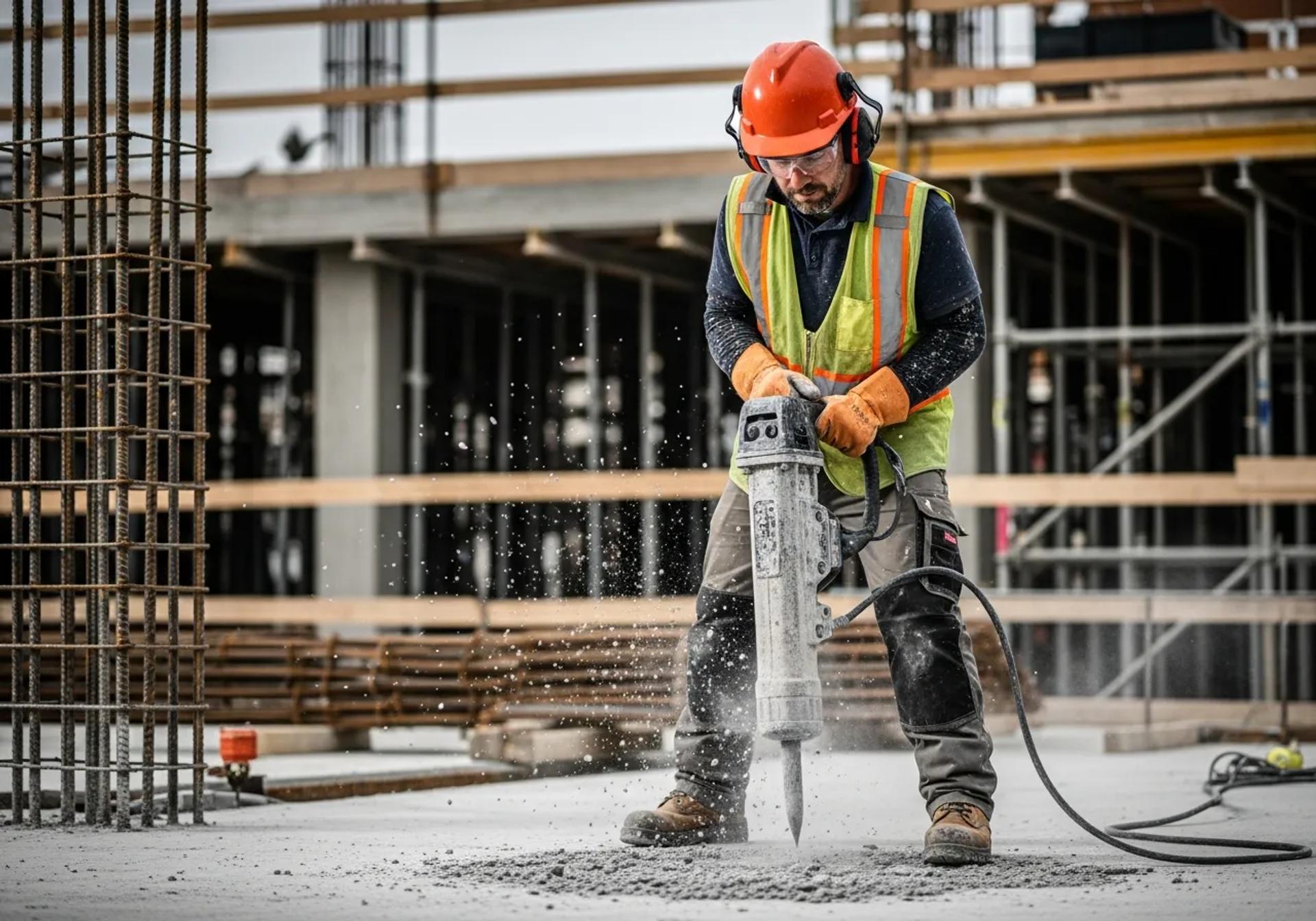
Understanding Concrete Breakers and Their Role in Construction
A concrete breaker, also known as a demolition hammer or jack hammer, is indispensable equipment for demolition and construction work in Thailand. This equipment destroys existing concrete structures through high-frequency impact force, whether removing floors, demolishing walls, breaking pavement, or digging trenches for pipe installation.
The operating principle of concrete breakers relies on generating repetitive impact force through a hardened chisel bit. The generated impact transfers to the concrete surface, creating cracks and fractures that break the material into pieces. The frequency and energy of impacts determine working efficiency.
Construction projects in Thailand require various sizes and types of demolition hammers, from small units for residential repairs to large machines for building demolition or road work. Selecting appropriate equipment for specific job requirements directly impacts efficiency and workplace safety.
Types of Concrete Breakers Used in Construction
Before deciding to purchase or rent, understanding types and operating principles of demolition equipment is essential, as each type has distinctly different advantages and limitations.
Electric Demolition Hammers
Electric demolition hammers operate using electric motors to drive impact mechanisms. They are popular choices for indoor work or areas with electrical access due to convenience and independence from additional equipment.
Key advantages of electric breakers include mobility and ease of transport. Lighter weight than pneumatic systems makes them suitable for confined spaces or elevated work positions. Operating noise levels range from 85-95 decibels, slightly quieter than pneumatic systems.
Impact energy of electric concrete breakers ranges from 10-70 Joules depending on size and model. Small units at 10-20 Joules suit light work like tile removal, while 40-70 Joule units effectively handle thick concrete floor demolition.
Ideal for:
- Renovation and remodeling work inside buildings
- Tile and thin concrete floor removal
- Applications requiring high mobility
- Areas with electricity but no compressed air system
Pneumatic Jack Hammers
Pneumatic jack hammers or air breakers operate using compressed air from air compressors as their power source. They are the primary choice for large-scale demolition and field construction requiring high power output.
Key advantages of pneumatic systems include higher impact force, ability to work continuously without heat buildup issues like electric motors, and high durability in harsh environments including dust, moisture, or water exposure.
Impact energy of pneumatic concrete breakers ranges from 50-150 Joules or higher, suitable for thick concrete demolition, road work, or mining operations. Impact frequency reaches 900-1,500 blows per minute depending on supplied air pressure.
Ideal for:
- Building and large structure demolition
- Road and highway construction
- Field construction without electrical access
- High-power continuous operation requirements


Calculating Concrete Breaker Size Using Impact Energy
Joules, the unit measuring energy per impact, is the most important specification for selecting appropriate equipment size matching concrete thickness and hardness. Higher Joules means better capability for heavy-duty work.
Equipment selection should primarily consider job characteristics. Tile or plaster removal requires only 10-20 Joules. Breaking 10-15 centimeter thick concrete floors needs 30-50 Joules. Reinforced concrete or road demolition requires 60 Joules or higher.
Beyond impact energy, equipment weight requires consideration. Heavier machines provide additional downward force improving breaking efficiency, but cause faster operator fatigue. Appropriate weight selection must account for working duration and operating posture.
For pneumatic jack hammers, air consumption requirements (CFM) need evaluation. Large units may require 70-90 CFM, demanding appropriately sized air compressors. Proper air system planning is essential for pneumatic breaker applications.
Selecting Concrete Breakers by Application Type
Indoor Renovation and Remodeling Work
Indoor work involves several constraints including limited space, restricted ventilation, and noise concerns for neighboring occupants. Medium-sized electric demolition hammers are most suitable for these applications.
Recommended impact energy for indoor work is 20-40 Joules, sufficient for tile floor removal, partial wall demolition, or door and window enlargement. Equipment weight should range from 5-15 kilograms for extended use without excessive fatigue.
Dust management is critical for indoor work. Many newer models feature built-in dust extraction or can connect to industrial vacuums, reducing airborne dust and maintaining safe working environments.
Field Demolition and Construction Work
Field work presents environmental challenges including heavy dust, heat, and humidity. Pneumatic concrete breakers are popular choices for these applications.
Pneumatic jack hammer systems must work with adequately powered air compressors. Generally, compressors delivering at least 100-125 CFM at 90 PSI are required for full breaker performance.
Equipment durability is paramount for field work. Machines should feature robust construction, impact resistance, and effective dust protection. Selecting reputable brands with available spare parts helps minimize project downtime.
Buy or Rent Concrete Breakers: Making Cost-Effective Decisions
The decision between buying or renting depends on multiple factors with no universal answer suitable for all situations.
Purchasing suits businesses with regular demolition or construction work, using equipment at least 2-3 days weekly, with storage space and maintenance-capable technicians. Advantages include immediate availability and no per-use costs.
Renting suits specific projects with defined timelines or businesses wanting trial periods before investment decisions. Rental also provides access to large or specialized equipment without major investment, plus freedom from maintenance concerns.
Safety Standards for Concrete Breaker Operation
Operating demolition equipment involves several risks requiring careful attention: injuries from flying concrete debris, hearing loss from loud noise, and vibration-induced injuries.
Essential personal protective equipment includes safety glasses or face shields for debris protection, ear plugs or muffs for hearing protection, anti-vibration gloves for reducing hand and arm impact, and steel-toe safety boots for foot protection from falling debris.
Limiting continuous operation time is essential. Experts recommend breaks every 30-45 minutes allowing body recovery from vibration exposure. Rotating operators within teams helps reduce Hand-Arm Vibration Syndrome risk.
AIRMAN and Namsang: Construction Equipment Specialists
AIRMAN is a leading Japanese brand renowned for high-quality construction equipment, including air compressors that power pneumatic jack hammer systems. AIRMAN products are designed for harsh working environments and reliable performance.
Namsang Chakkol serves as the authorized AIRMAN distributor in Thailand, providing comprehensive services including new equipment sales, Japanese imports, and both short-term and long-term rental services. Their engineering team and expert technicians offer consultation for appropriate equipment selection, along with after-sales service and genuine parts support.
With over 40 years of experience in the construction machinery industry, Namsang understands the needs of contractors and construction businesses in Thailand. Whether for small jobs or large projects, they provide targeted recommendations and investment value.